

Live cohorts and pilot waitlists are now open · Original simulated cases · Independent educational services
Specialty Systems & Care Delivery Labs

U.S. Clinical Systems & Safe Supervised Practice Interview Labs

Six eight-hour specialty labs help learners explore care delivery, communication, teamwork, transitions, escalation, and specialty-specific reasoning without implying independent-practice readiness.

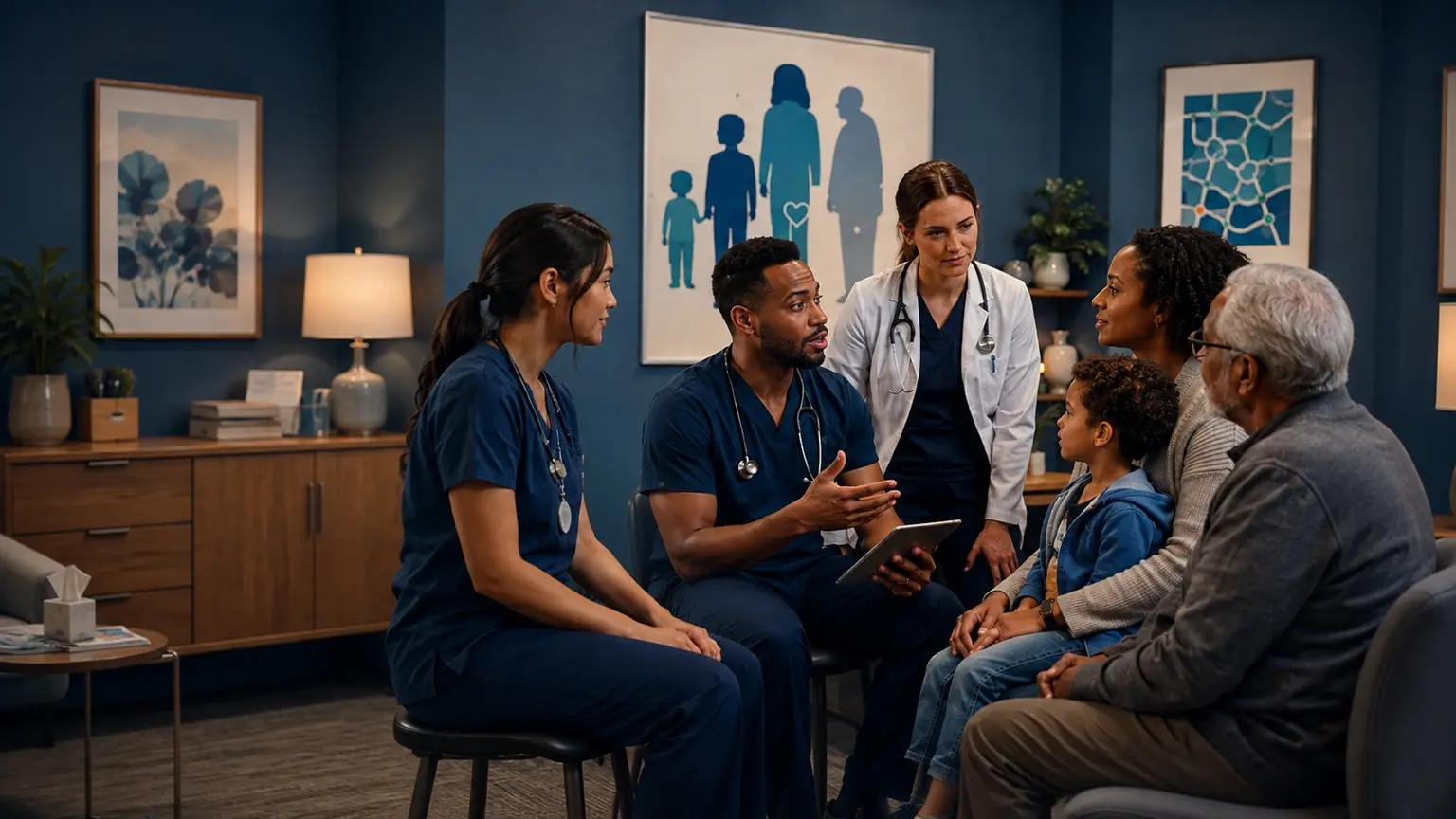
Medical learners from different specialties practicing systems-based communication
Shared sequence

Recognize → Verify → Escalate → Close the loop → Document/report → Learn

Labs use structured communication approaches such as SBAR, check-back, closed-loop communication, handoff, I-PASS, huddles, teach-back, CUS, and debriefing.

View the six specialties
Internal Medicine

U.S. Internal Medicine Systems, Transitions & Safe Escalation Lab

Outcome: Trace a patient from admission through discharge and continuity clinic; describe team roles and supervision; give a safe presentation and handoff.

Block 1

How inpatient IM works

ED/transfer handoff, admission, pre-rounding, rounds, consults, nursing, pharmacy, case management, rapid response, cross-cover, and supervision.

Block 2

Present uncertainty clearly

One-liner, prioritized problem list, immediate risks, consult request, SBAR urgent call, and I-PASS-style signout.

Block 3

Discharge and continuity

Medication reconciliation, pending tests, follow-up ownership, teach-back, referrals, and result follow-up.

Block 4

Safety and interview capstone

Original near miss, immediate safety action, escalation, reporting route, prevention, and a supervised-practice interview answer.

Take-home tools

  • IM team map
  • Oral-presentation template
  • Handoff card
  • Discharge-safety checklist
  • Pending-results tracker
  • Safety-event reflection
Family Medicine

U.S. Family Medicine Continuity, Primary Care & Safe Transitions Lab

Outcome: Explain how U.S. family medicine connects clinic, hospital, community, prevention, behavioral health, and longitudinal follow-up.

Block 1

How the practice works

Patient panels, pre-visit planning, huddles, rooming, precepting, checkout, inbox, team coverage, telehealth, and community resources.

Block 2

Acute care and safe uncertainty

Triage, red flags, same-day escalation, interpreter use, patient-centered communication, and referral to higher-level care.

Block 3

Continuity across settings

Chronic disease, prevention, behavioral-health integration, affordability, social barriers, transitions, and follow-up.

Block 4

Close outpatient safety loops

Abnormal results, referrals, refills, portal messages, vaccine or medication near misses, debriefing, QI, and interview practice.

Take-home tools

  • Clinic-day flow sheet
  • Acute-visit safety script
  • Community care-team map
  • Results/referral tracker
  • Safety/QI worksheet
  • Interview-answer cards
Psychiatry

U.S. Psychiatry Systems, Safety & Supervised Team Practice Lab

Outcome: Describe safe work across inpatient, emergency, consultation-liaison, community, and outpatient psychiatry settings.

Block 1

Team and supervision map

Attending, resident, nursing, psychology, social work, pharmacy, security, primary team, patient, family, interpreter, and role boundaries.

Block 2

Inpatient and emergency workflow

Pre-rounding, collateral, nursing information, rounds, documentation, discharge planning, and changes in safety concern.

Block 3

Outpatient closed-loop care

Referrals, medication monitoring, refills, missed visits, privacy, family involvement, therapists, primary care, and community resources.

Block 4

Safety and communication

Safety concerns, environmental risks, handoffs, medication reconciliation, near-miss reporting, consultation-liaison communication, and respectful disagreement.

Take-home tools

  • Scope-and-escalation map
  • Psychiatric problem-representation template
  • Closed-loop care checklist
  • Safety-response card
  • Consult script
  • Interview responses
Neurology

U.S. Neurology Systems, Time-Critical Communication & Safety Lab

Outcome: Communicate a new neurologic change safely, coordinate inpatient and outpatient care, and demonstrate ownership of pending information within supervision.

Block 1

Neurology service map

Emergency, consults, ward, ICU, clinic, EEG/diagnostics, nursing, pharmacy, rehabilitation, case management, and supervision.

Block 2

Acute inpatient and consult workflow

Timeline, baseline, chart review, pending studies, rounds, primary-team communication, and rapid escalation of a new change.

Block 3

Outpatient continuity

Referral triage, result routing, medication questions, caregiver communication, functional needs, rehabilitation, and follow-up ownership.

Block 4

Diagnostic safety capstone

Anchoring, missed change, handoff omission, medication-list discrepancy, result follow-up, reporting, and changed information after signout.

Take-home tools

  • Neurology workflow map
  • Acute-change SBAR
  • Pending-items tracker
  • Consult/handoff rubric
  • Near-miss analysis
  • Specialty interview answers
Pediatrics

U.S. Pediatrics Family-Centered Care, Transitions & Safe Escalation Lab

Outcome: Explain family-centered inpatient and outpatient care, recognize child-specific safety risks, and communicate safely with caregivers and teams.

Block 1

Pediatric team and inpatient journey

ED/direct admission, pre-rounding, nursing priorities, family-centered rounds, task lists, discharge planning, interpreter, and caregiver roles.

Block 2

Family-centered communication

Plain language, caregiver questions, teach-back, interpreters, respectful uncertainty, and oral presentation.

Block 3

Outpatient pediatrics and transitions

Well and sick visits, prevention, medication/allergy review, results, referrals, after-visit instructions, and hospital-to-PCP continuity.

Block 4

Pediatric safety capstone

Patient identification, kilogram-versus-pound risk, medication reconciliation, infection prevention, clinical deterioration, language need, and near-miss reporting.

Take-home tools

  • Pediatric workflow map
  • Family-centered presentation template
  • Escalation/handoff script
  • Safety-hotspots checklist
  • Interview responses
General Surgery

U.S. Surgery Perioperative Systems, Teamwork & Safe Escalation Lab

Outcome: Describe consult-to-discharge surgical care, perioperative safety processes, role boundaries, and a safe response to concern in the OR or on the floor.

Block 1

How a surgical service works

Attending, chief/senior, junior resident, APP, anesthesia, OR nurse, scrub team, PACU, floor nurse, consultant, and case manager.

Block 2

Consult, rounds, and perioperative workflow

ED consult, focused presentation, task lists, OR coordination, post-op rounds, discharge, and questions for the senior.

Block 3

Outpatient surgery and transitions

Referral clinic, pre-op planning, shared decision-making under supervision, post-op follow-up, complication calls, pending items, and PCP handoff.

Block 4

Safety and speaking up

Patient/site/procedure verification, allergies, medication labeling, infection prevention, post-op deterioration, OR/PACU/floor handoffs, and CUS/SBAR language.

Take-home tools

  • Consult-to-discharge map
  • Oral-consult template
  • Perioperative safety observer checklist
  • Escalation card
  • Post-op transition checklist
  • Interview answers

Specialty safeguards

These labs teach recognition, communication, supervision awareness, and use of local policy. Psychiatry legal processes vary by state and institution. Pediatrics content teaches verification and escalation rather than independent dosing. Surgery content teaches team verification and time-out processes rather than implying that an incoming resident independently consents, site-marks, or operates.