Live cohorts and pilot waitlists are now open · Original simulated cases · Independent educational services
Anesthesiology
Specialty-Fit & Interview Evidence Lab

Do physiology, vigilance, anticipation, and calm team decisions fit the way you work?

Do you want a specialty built around physiology, vigilance, procedural skill, anticipation, and rapid team-based decisions?

Two September–October 2026 cohorts · Live onlineCohort 1 — Thursday, September 24, 2026 · 6:00–10:00 PMCohort 2 — Thursday, October 1, 2026 · 6:00–10:00 PMLimited capacity: just 24 seats.All workshop times are Eastern Daylight Time (EDT).
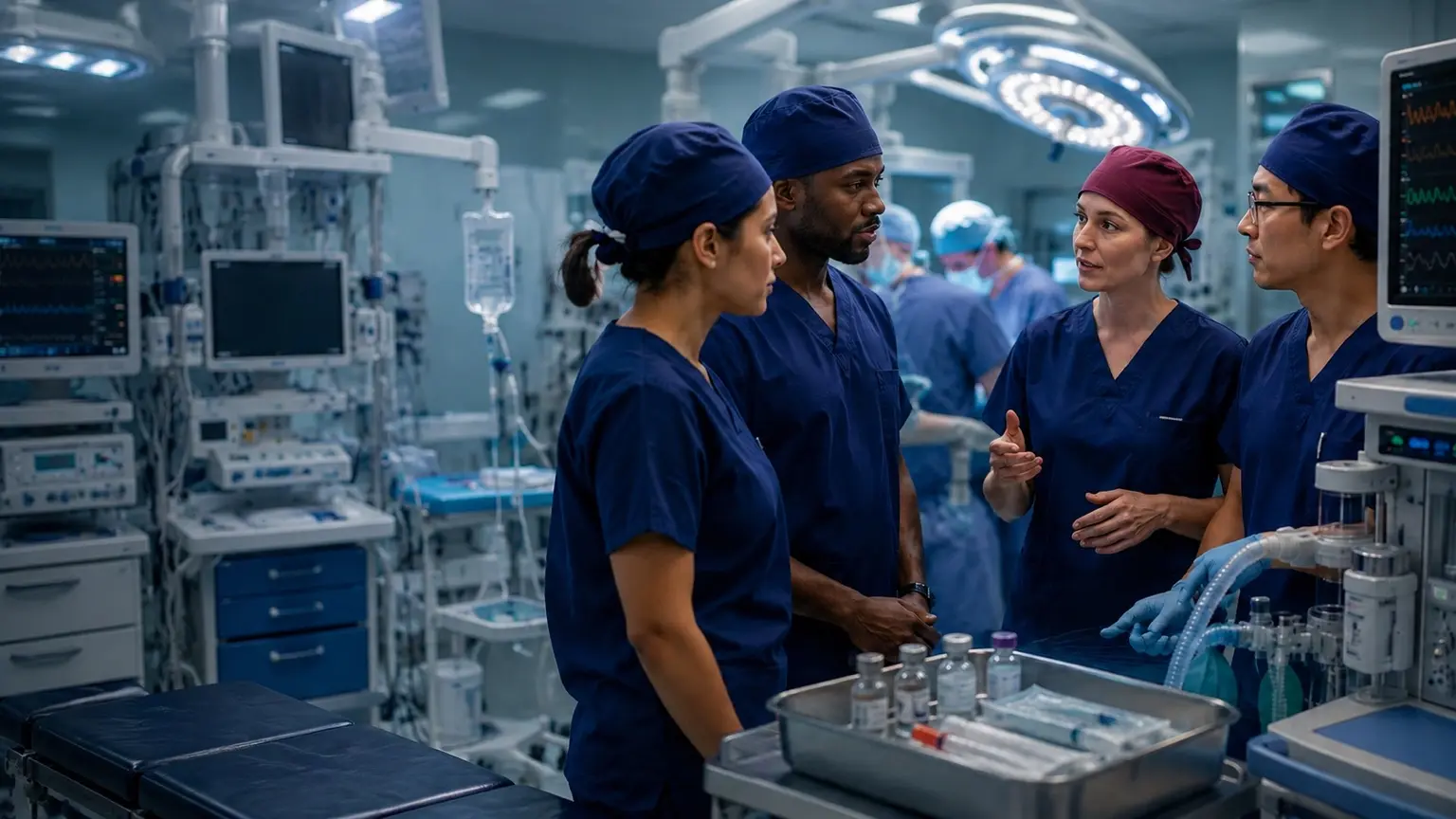
Anesthesiology team discussing a perioperative plan in the operating room
4 live hoursGuided interactive lab
4 physician facultyMultiple career stages
$176One specialty workshop
90-day replayWhen available for the cohort
Know the work. Test the fit. Build the evidence.

Understand the work before you explain the choice.

Current ACGME requirements characterize anesthesiology around perioperative and periprocedural management, physiological maintenance, pain, critical illness, pharmacology, quality, and leadership of perioperative teams.

Anesthesiology is not only “liking procedures and pharmacology.” It is preparing before the room is ready, maintaining physiologic stability, anticipating risk, communicating clearly in high-stakes teams, and responding with precision when the plan changes.

In four live hours, test whether vigilance and physiology-driven problem solving are work you want to do repeatedly—then build a credible “Why Anesthesiology?” story from your lived experience.

Original work sample

What you will experience

Your original VignetteRx work sample presents a perioperative plan that changes when new risk information appears. You will identify what you notice, what must be verified, who needs to hear the concern, how to state it, and when to escalate. The work sample is about anticipation and team communication—not unsupervised clinical management.

Physiology · Vigilance · Anticipation · Crisis teamwork
Test your fit

This lab is for you if you are asking

  • Do I enjoy anticipating problems before they become crises?
  • Does applied physiology and pharmacology sharpen my focus?
  • Can I find satisfaction in brief but consequential patient relationships?
  • Do I work well in the OR and other highly interdependent teams?
Interview evidence

Move beyond a generic “why.”

Turn preparation, composure, teamwork, and interest in physiology into authentic interview evidence. Practice answers to:

  • “Tell me about a time preparation prevented a problem.”
  • “A team member’s plan concerns you. How would you communicate it?”
  • “Why Anesthesiology, based on the work rather than an image of the specialty?”
Four-hour live agenda

A guided decision-and-performance lab—not four hours of lectures.

Before the lab

Map your starting point

Complete the 10-minute Specialty-Fit Inventory, clinical-experience inventory, baseline response, and specialty work map.

Hour 1

Test the fit

Compare your interests, motives, preferred pace, uncertainty tolerance, team structure, and relationship patterns with the work.

Hour 2

Do the work sample

Work through an original VignetteRx case using live polling, small-group discussion, and a guided physician debrief.

Hours 3–4

Build interview evidence

Create STAR-L and situational responses, practice aloud, ask candid faculty questions, and leave with a focused action plan.

Choose your level of support

Start independently, join the live lab, or add physician feedback.

Choose the level that fits your current preparation needs. Live and feedback services remain specialty-specific.

Start independently$59

Anesthesiology Specialty-Fit Assessment & Evidence Toolkit

Complete the specialty-fit assessment, build your evidence map, use the interview templates, and work through the specialty-specific handouts on your own.

Get the Anesthesiology Toolkit — $59Square digital-product checkout is being configured.
Add direct feedback$158

Anesthesiology Feedback Circle

Bring your specialty-fit evidence and interview responses to a six-person practice session for focused physician feedback, revision, and peer learning.

Available to live-lab participants only · 6 seats

Add Feedback Circle — $158$158 add-on · $334 total with the live lab. Square class checkout is being configured.
Work one-to-one$265

1:1 Faculty Evidence & Interview Review

A private 60-minute session with a VignetteRx physician faculty member to review your specialty rationale, evidence map, and interview responses.

Book a 1:1 Faculty Review — $265Square Appointments scheduling is being configured.

Educational services only. No examination score, interview invitation, residency placement, licensure, or Match outcome is guaranteed.

Who you will learn with

Four physicians. Real perspectives across the U.S. training path.

Learn with four physician faculty, including IMG physicians at different career stages—from the transition after internship through residency and clinical practice. Analyze your fit, ask questions you would not ask in a generic webinar, and understand the specialty through the people doing the work.

Registration

Reserve your Anesthesiology workshop seat.

$176 includes one live four-hour guided lab, pre-work, the specialty-fit and interview toolkit, and recording access when available for this cohort. Limited capacity: just 24 seats.

Cohort 1 — Thursday, September 24, 2026 · 6:00–10:00 PMEastern Daylight Time (EDT)
Cohort 2 — Thursday, October 1, 2026 · 6:00–10:00 PMEastern Daylight Time (EDT)
Workshop tuition$176
Reserve My Seat — $176Secure checkout via Square.
Frequently asked questions

Clear expectations before you enroll.

No. The lab helps you evaluate evidence from your real experiences and identify what you still need to investigate. You make the specialty decision.
No. It is designed for both IMG and U.S. medical-student applicants. IMG physician faculty add valuable perspective on navigating the U.S. training transition.
No. The lab provides specialty exploration, interview practice, and faculty interaction. It does not guarantee any interview, Match, mentorship, placement, rotation, or recommendation outcome.
No. Cases teach recognition, communication, supervision awareness, and escalation judgment. They do not replace clinical supervision, local policy, or independent patient-care training.